
What Is the Avenue of the Arts Neighborhood Like? A Homebuyer’s Guide
Every great city has a street that reveals its character in a single afternoon. Paris has the Champs-Élysées. New York has Park Avenue. Barcelona has La Rambla. London has the South Bank. Chicago has Michigan Avenue — that improbable, treelined stretch that distills a city’s essence into one lasting memory, and one camera roll.
In Philadelphia that street is the Avenue of the Arts. Nowhere else do you feel the city’s full personality in a single stretch: part cultural district, part celebration zone, with restaurants, hotels, private clubs and sky-high luxury residences mixing effortlessly into a neighborhood thousands of people already call home. If you’re considering joining them, here’s what you should know.
Key Takeaways
- The Avenue of the Arts is Philadelphia's civic and cultural spine, a walkable, one-mile stretch from City Hall to Washington Avenue anchored by the nation's largest theater district outside Broadway.
- It's an established, growing residential neighborhood, home to roughly 8,500 people, expanding faster than the city as a whole.
- Sixteen buildings on the Avenue are listed on the National Register of Historic Places, standing alongside major contemporary additions like Arthaus and the Kimmel Center.
- It ranks among Philadelphia's most walkable neighborhoods, with a Walk Score of 99 and direct Broad Street Line subway access.
- AveArts 2.0, a $150 million public investment, is underway to further transform the corridor with expanded green space and pedestrian improvements.
WHERE EXACTLY IS IT, AND WHAT DOES IT LOOK LIKE?
Located in the heart of Center City Philadelphia, the Avenue of the Arts stretches roughly one mile, from City Hall south to Washington Avenue. At nearly 150 feet wide, it’s laid out on a civic scale closer to the grand boulevards of Europe than the tight rowhouse grid that defines so much of the rest of Philadelphia — broad sidewalks, landscaped medians and long, unbroken sightlines give it a sense of grandeur few American downtowns can claim.
The Avenue itself (officially South Broad Street, and often called Philadelphia’s “missing 14th Street”) is flanked by two parallel streets that round out the neighborhood. One block east, 13th Street aka Midtown Village is Philadelphia’s most celebrated restaurant row. One block west, 15th Street handles the everyday essentials — dry cleaners, wine shops, pharmacies — a reminder that this is not just a destination, but where thousands of Philadelphians live.
At the north end, City Hall anchors the Avenue: a massive Second Empire masonry landmark opened in 1901, topped by Alexander Milne Calder’s statue of William Penn, 548 feet above the street. Dilworth Park, at its western base, draws residents to ice skate in winter and cool off in its fountains come summer. At the south end, Ray King’s Beacon sculptures frame the gateway at Washington Avenue, where new construction — more than 1,000 luxury apartments, a Giant Heirloom Market, a Sprouts, a Target, and a wave of new restaurants — continues to reshape the neighborhood’s southern edge.
Every block in between is draped in architectural glory — an exquisite lineup of period and contemporary buildings, one more distinct than the next, all blending harmoniously. Sixteen buildings along the Avenue are listed on the National Register of Historic Places, a concentration of preserved architectural excellence that few American neighborhoods this size can claim. These architectural icons like the Academy of Music, Union League, and Bellevue Hotel stand shoulder to shoulder with contemporary additions, like Arthaus, a Kohn Pedersen Fox design and winner of the American Architecture Award, the glass-domed Kimmel Center by Rafael Vinoly and famed theater designer Hugh Hardy’s Wilma Theater. Together these three contemporary buildings have transformed the Spruce Street corner.
This one mile is also where the neighborhood’s major pieces of city life concentrate: the performing arts venues that give the Avenue its name, the premier hotels, the destination restaurants, and the sky-high residential towers all sit along this single stretch — which is precisely what makes it possible to live, dine, be entertained and host out-of-town guests without ever leaving the Avenue of the Arts.
HOW DOES IT COMPARE TO OTHER PHILADELPHIA NEIGHBORHOODS?
Avenue of the Arts is Philadelphia’s performing arts district. At night, the marquees glow and the sidewalks buzz with the theater crowd – there’s always something happening, from concerts to Broadway musicals. The street is lined with stunning theaters, old and new, including the Academy of Music, the oldest operating opera house in America. Top restaurants line the street as well.
The Avenue wasn’t designed to be quaint – it was designed to be grand. Its wide street and generous sidewalks give it an unmistakable big-city energy that’s still approachable and fun. But it’s more than a hub for culture and dining: it’s Philadelphia’s unofficial town square, where the Mummers Parade ushers in the New Year, sports championships are celebrated, and City Hall serves as the backdrop for countless graduation and wedding photos.
WHO LIVES HERE?
Great neighborhoods are defined less by their buildings than by the people who fill them, and the Avenue draws an unusually wide cross-section of Philadelphia into one square mile. Young professionals walk to work rather than commute to it. Empty nesters trade suburban lawn maintenance for a lock-and-leave lifestyle steps from the orchestra. Physicians and researchers from Thomas Jefferson University Hospital and Hospital of the University of Pennsylvania value being minutes from world-class hospitals. Artists and performers live where they create. Entrepreneurs are drawn to the energy, and retirees choose a lifestyle surrounded by restaurants, culture and people of all ages and interests.
This isn’t a neighborhood that empties out after business hours the way so many downtowns do. It’s home in the fullest sense — the same wide, strollable sidewalks serve commuters hurrying to work in the morning, a lunch crowd at noon, a theater line at seven, and a resident walking his dog in the evening, without missing a beat.
The numbers back this up. As of 2023, the Avenue of the Arts’ population was estimated at roughly 8,500 people, growing at an annual rate of about 3.45 percent — outpacing the city as a whole and expected to keep doing so over the next five years. The median age is 35.
WHERE TO LIVE?
The residential stock ranges from reimagined historic office towers to ground-up high-rises, with a variety of condominiums (for purchase) and apartment (for rent) options offering amenity-rich, white-glove lifestyles featuring a modern interior aesthetic, whatever a building’s age. Arthaus, at Broad and Spruce, set a new benchmark on both counts and elevates luxury residential living on the Avenue, and at 47 stories is the tallest building on the street.
Much of that residential character traces back to one visionary developer. Carl Dranoff of Dranoff Properties is the Avenue’s most prolific developer with a portfolio that includes Arthaus (condominiums), Symphony House (condominiums), SouthStar Lofts (apartments), and 777 S. Broad Street (apartments) and two new projects at S. Broad and Pine and S. Broad and Carpenter. All totaled Dranoff has invested over a half billion dollars in the residential development of Avenue of the Arts.
Other developers have followed his lead. An historic office tower was converted into The Atlantic residential apartments. One Thousand and One delivered brand new, family-focused apartments to Broad and Washington, and the Residences at the Ritz-Carlton offer condominium living with a view of City Hall. Nearly every vintage building has found a second life as a home and new ground up construction has infilled the lots in between.
And yes, you can bring your car. While the Avenue’s walkability is part of its appeal, most of the multi-family buildings here also offer on-site parking, so residents aren’t forced to choose between city living and having a car in the garage when they need one. Arthaus has its own private, off-street driveway to make car use as easy as it can possibly be.
WHAT ARE SHOPPING AND EVERYDAY ERRANDS LIKE?
This is, first and foremost, a neighborhood built for everyday living. At Broad and Washington, residents shop one of Center City’s premier retail blocks: GIANT Heirloom Market, Sprouts Farmers Market, Target, Chipotle and Wonder’s food hall all sit within a single city block. Major banks — TD, PNC, Chase, Citizens and Wells Fargo — line the Avenue, putting everyday errands steps from home. The boutiques along West Walnut Street are just a few blocks further for anyone who needs retail therapy.
World-class healthcare is close by, too. Thomas Jefferson University Hospital and Wills Eye Hospital are both a few blocks away, and the Hospital of the University of Pennsylvania, Pennsylvania Hospital and Children’s Hospital of Philadelphia, while farther out, are an easy trip especially if your building offers town car services like at Arthaus.
HOW WALKABLE IS IT, AND WHAT ABOUT TRANSIT?
The Avenue of the Arts is about as walkable as American neighborhoods get. The corner of Broad and Spruce, where Arthaus sits, carries a Walk Score of 99 — a “Walker’s Paradise” — along with a Transit Score of 100 and a Bike Score of 90, and Avenue of the Arts ranks as the most walkable neighborhood in Philadelphia.
The Broad Street Line subway runs directly beneath the Avenue, with stations up and down the north/south city axis. Head south and it drops you at NRG Station, steps from the sports complex — home to the Eagles, Phillies, 76ers and Flyers. Head north through Center City and it connects to regional rail and Amtrak service, putting the rest of the East Coast within reach without a car.
For trips across the river to New Jersey, the PATCO Speedline stop at 15th and Locust puts Camden and points beyond just a short ride away.
WHAT’S THE FOOD SCENE LIKE?
World-class culture and genuinely good food exist side by side at the corner of Broad and Spruce. You can enjoy oysters, a martini and full array of seafood tavern options at Loch Bar on the ground floor of Arthaus. Across the street is Steak 48. The Leo is on the ground floor of the Kimmel Center. Up and down the street you’ll find exceptional dining establishments like Capital Grille, Aqimero, Dolce Italian, Estia, Kitchen + Kocktails, Giorgio on Pine and many more.
Wander one block east and the architectural character changes entirely. Midtown Village is one of Philadelphia’s most dynamic restaurant scenes — independent kitchens, cocktail bars and cafés line up along the narrow 13th street; a charming string of low-rise buildings and storefronts. Here you’ll find restaurants like Darling Jack’s Tavern and Bud & Marilyn’s elevating American cooking into a real craft, and El Vez with its colorful Mexican-inspired interior serving up delectable tacos, guacamole and margaritas.
Unlike most arts districts built primarily for tourists, these establishments belong just as much to the residents of the neighborhood as they do the visitor following Trip Advisor reviews. Nothing here feels staged for an audience — everything feels lived and real, which, in a city that prides itself on not putting on airs, is precisely the point.
Coffee is just as easy to find. Curtain Call, the Kimmel Center’s all-day café is open to the public. The same is true for Good Karma Café in the lobby of the Wilma Theater. Tuscany Cafe also on the Avenue of the Arts is a great place to grab an espresso between errands.
The iconic Reading Terminal Market rounds out the food scene. Nearly six million people visit the European food hall style market each year. Here you’ll find prepared-food stalls and lunch counters, alongside dozens of specialty vendors selling meat, seafood, produce, and fresh-baked goods. Built in an historic train shed, it is just a few blocks to the north and east of Avenue of the Arts and is the perfect place to restock the kitchen and grab a prepared meal to go.
HOW MUCH ARTS AND CULTURE IS REALLY HERE?
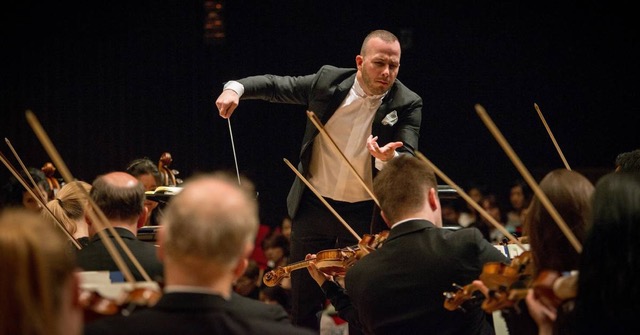
The arts aren’t a backdrop on the Avenue of the Arts — they’re the organizing principle. It is Philadelphia’s theater district with more than 10,000 performing-arts seats making it America’s largest theater district outside of Broadway: the Philadelphia Film Society, Miller Theater, the Wilma Theater, the Kimmel Center (home to the Philadelphia Orchestra beneath its glass dome), the Suzanne Roberts Theatre, and the Academy of Music, the country’s oldest continuously operating opera house.
Musical history runs deep. Bronze plaques, more than 200, are set into the sidewalks in a Walk of Fame commemorating R&B and soul greats like Boyz II Men, Patti LaBelle, the Stylistics and the O’Jays; jazz and blues icons like John Coltrane, Billie Holiday, Stan Getz and Nina Simone; and rock and pop names like Chubby Checker, Jim Croce, Joan Jett, and Hall & Oates — all of whom performed on this street at one point in their careers. Legendary songwriters and producers Kenny Gamble and Leon Huff invented the Philly Sound in the 1970s. Their Philadelphia International Records occupied the corner of Broad and Spruce, where Arthaus now stands and earned over 175 gold and platinum records. The duo was inducted into the Rock and Roll Hall of Fame in 2008.
Creative life is visible everywhere on the Avenue of the Arts. Musicians slip in and out of stage doors, dancers hurry to class at the Rock School, visual artists perfecting their craft in studio at the Village of Industry & Art (VIA). Touring actors playing in traveling Broadway shows sip coffee at sidewalk cafés after rehearsal. Students from the City’s High School of Creative and Performing Arts hurry along the sidewalks carrying music cases or portfolios. In 2027, Temple University’s new center-city campus will open adding a whole new and exciting student dimension.
Walk it slowly enough and the neighborhood starts to feel like an open-air museum. City Hall alone carries more than 250 sculptures by Alexander Milne Calder — one of the largest ensembles of architectural sculpture anywhere in the world. A block north and west from there is Robert Indiana’s LOVE sculpture which draws a steady line of visitors for photo ops. Claes Oldenburg’s Clothespin has become one of the city’s most photographed landmarks on 15th street. At the south entrance of the City Hall courtyard is Branly Cadet’s Octavius V. Catto Memorial honoring the civil rights pioneer and educator. More than 17 murals — including “Untitled” by Amy Sherald, the artist who painted Michelle Obama’s official White House portrait — wind through the Avenue of the Arts neighborhood as part of Mural Arts’ Mural Mile.
WHERE DO GUESTS STAY WHEN THEY VISIT?
For residents who like having options close to home for out-of-town guests, six hotels anchor the neighborhood: the Ritz-Carlton and W Philadelphia at the luxury end, Element and Cambria Hotel for a more design-forward stay, and a DoubleTree by Hilton. Those enamored by history, The Bellevue Hotel – Hyatt still anchors the neighborhood’s grand-hotel tradition, and its recently restored lobby and ballrooms are stunning, summoning the same sense of grand occasion as when it opened in 1904.
WHAT’S NEXT FOR THE NEIGHBORHOOD?
Great neighborhoods are never finished, and the Avenue of the Arts keeps evolving. Adaptive reuse projects continue turning historic buildings into new residences, public spaces are becoming greener and more pedestrian-focused, and each improvement builds on the last rather than starting over.
AveArts 2.0 is the next chapter: a $150 million ten-block public realm reimagining with flowering medians, expanded tree canopy, landscaped sidewalks, public art, creative seating, improved lighting, upgraded bus transit stops and year-round programming — the kind of investment that turns a well-used street into a genuine promenade. The plan doesn’t seek to reinvent the Avenue; it seeks to complete it, building on three decades of history that has already taught everyone involved the same lesson: authenticity can’t be manufactured on a deadline. It must be nurtured, block by block, for as long as it takes.
FAQ
Is the Avenue of the Arts a good neighborhood to live in?
Yes. It’s one of Center City’s most walkable, amenity-rich neighborhoods, home to roughly 8,500 residents and growing faster than the city as a whole, with easy access to culture, dining, transit and everyday errands all within a single mile-long stretch.
How walkable is the Avenue of the Arts?
Extremely. The corner of Broad and Spruce carries a Walk Score of 99, a “Walker’s Paradise,” along with a Transit Score of 100 and a Bike Score of 90, and Avenue of the Arts ranks as the most walkable neighborhood in Philadelphia.
Can residents have a car on the Avenue of the Arts?
Yes. While the neighborhood’s walkability is part of its appeal, most multi-family buildings here also offer on-site parking, so residents aren’t forced to choose between city living and car ownership.
What kind of housing options are available on the Avenue of the Arts?
The residential stock ranges from reimagined historic office towers to ground-up high-rises, with both condominium and apartment options offering amenity-rich, white-glove lifestyles. Arthaus, at 47 stories, is the tallest building on the street.
What's within walking distance for everyday errands?
At Broad and Washington, residents can reach GIANT Heirloom Market, Sprouts Farmers Market, Target, Chipotle and Wonder’s food hall within a single city block, along with major banks lining the Avenue and boutiques a few blocks further on West Walnut Street and the iconic Reading Terminal Market just a few blocks north and east.
About the Author

Julia Dranoff
Managing Director and Chief Operating Officer, Dranoff Properties
Julia Dranoff is Managing Director and Chief Operating Officer at Dranoff Properties, where she shapes the company’s strategy across acquisitions, operations, sales and marketing, financing and development. She has overseen the creation of mixed-use urban developments representing more than $500 million in company-developed real estate, with another $500 million in the pipeline. Julia holds a B.S.E. in Civil Engineering from Princeton University and an M.B.A. in Real Estate and Finance from The Wharton School and serves on the Board of Trustees for The Franklin Institute and the Advisory Board of the Urban Land Institute.
In Residence is a weekly journal from Arthaus exploring the questions luxury buyers are already asking about life on the Avenue of the Arts.
Author disclosure: Julia Dranoff is Managing Director and Chief Operating Officer at Dranoff Properties. This article is for informational purposes and reflects publicly available data as of mid-2026. It is not financial or investment advice; prospective buyers should verify current pricing, inventory, and tax abatement terms directly with a real estate professional and consult a financial advisor before making a purchase decision.